

Dolmabahçe Palace & Bosphorus Cruise Tour
One of the best ways to spend a day in Istanbul is to explore the magnificent 285-room Dolmabahçe Palace right along the Bosphorus, enjoy a delightful lunch, and then embark on a Bosphorus Cruise Tour in the afternoon or during sunset. The location of the palace, situated next to the Bosphorus, makes it convenient to seamlessly transition to the cruise, minimizing time and energy spent commuting between attractions.
Some History
Dolmabahçe Palace is a 19th-century Ottoman masterpiece, commissioned by Abdülmecid I, the 31st Sultan of the Ottoman Empire. Construction began in 1843 and spanned 13 years, concluding in 1856. The site of the palace was historically significant even before the palace was built. Over 400 years ago, it served as a port where naval ceremonies were held. During the 17th century, the area was gradually filled in, earning the name "Dolmabahçe," which means "filled garden" in Turkish. The palace’s luxurious design blends Ottoman and European architectural elements, showcasing the empire’s modernizing vision during its twilight years.
Inside the Palace
Let’s begin our virtual tour by entering the palace. There are two main entrances: one from the Painting Museum (Beşiktaş side) and the other from the Kabataş side. The Kabataş entrance is the most practical and commonly used, as it provides a natural flow starting with the Selamlık (the administrative section of the palace), continuing through the Harem (the private quarters of the royal family), and ending at the Painting Museum.
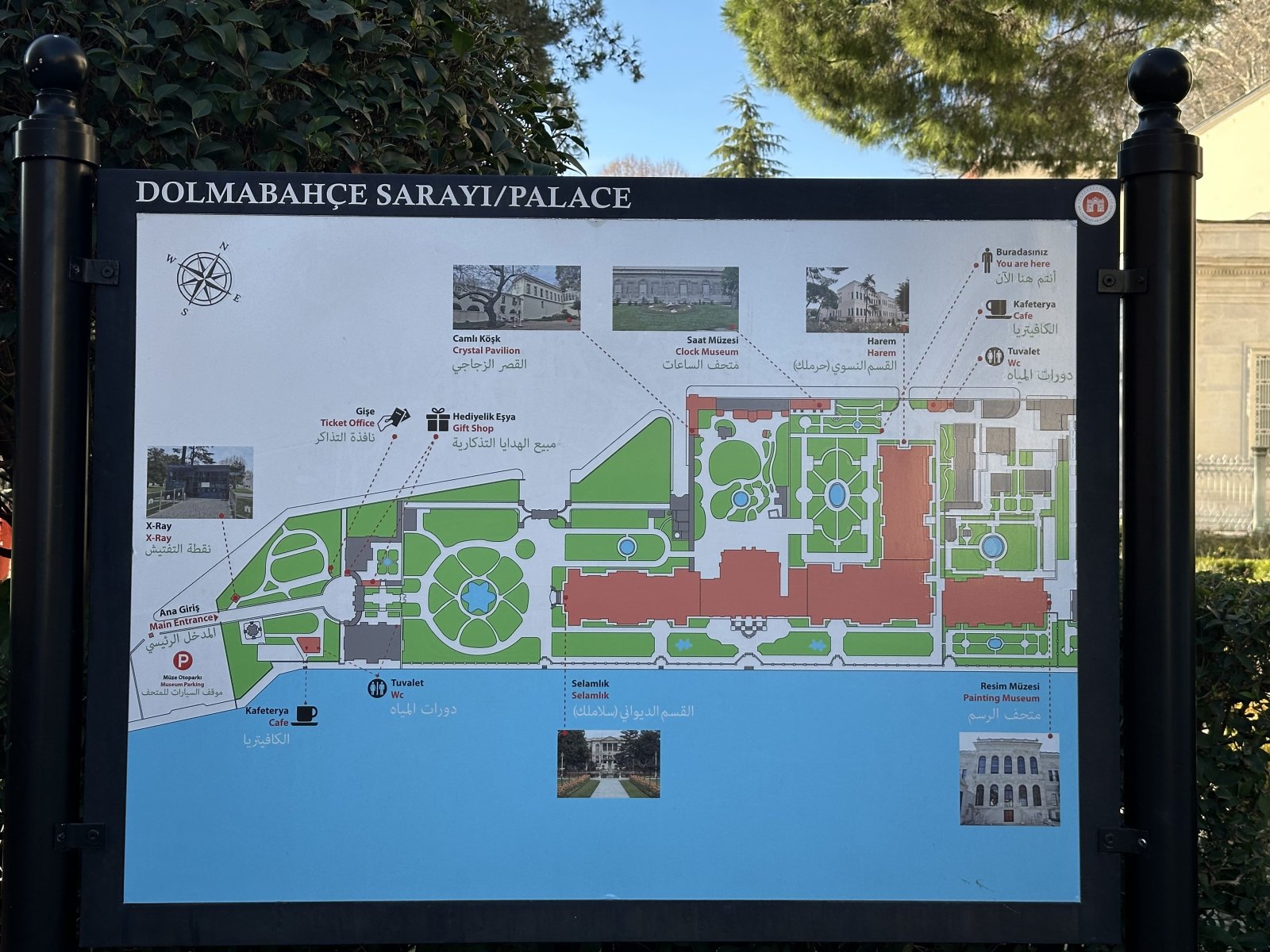
Plan of Dolmabahce Palace
Selamlık
The tour starts in the Selamlık, the primary administrative wing of the palace where royal meetings and state ceremonies took place. This section is designed to impress with its grand architecture, elaborate chandeliers, and exquisite décor. One of the highlights of this part is the Muayede Hall, or the Grand Ceremonial Hall, which features a 36-meter-high dome and can accommodate up to 2,500 people. The hall’s dazzling chandeliers and detailed craftsmanship reflect the wealth and power of the Ottoman Empire during its final years.
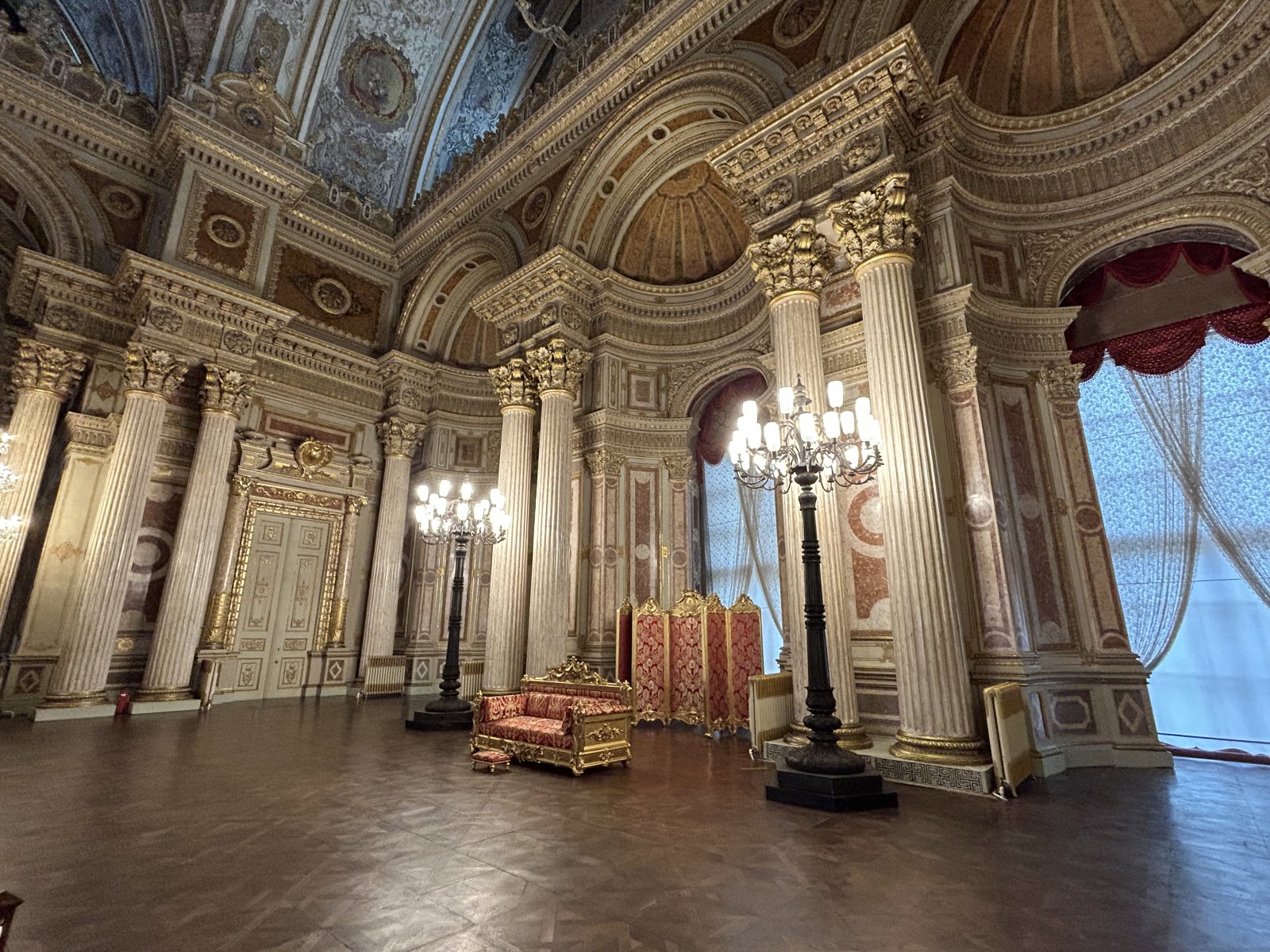
Grand Ceremonial Hall in Selamlık
Dolmabahçe is a palace where we find lots of architectural elements of baroque, rococo and neo-classical styles. One of the best examples of this can be found in the crystal staircases which connect the protocol floor to the sultan's floor. The glass ceiling in this part of the palace is designed by the English architect James William Smith, and the handrails and the chandelier were bought from England. The glass ceiling allows this part to be illuminated without needing another lighting. The crystals of the staircases shine beautifully with the incoming rays of sun.
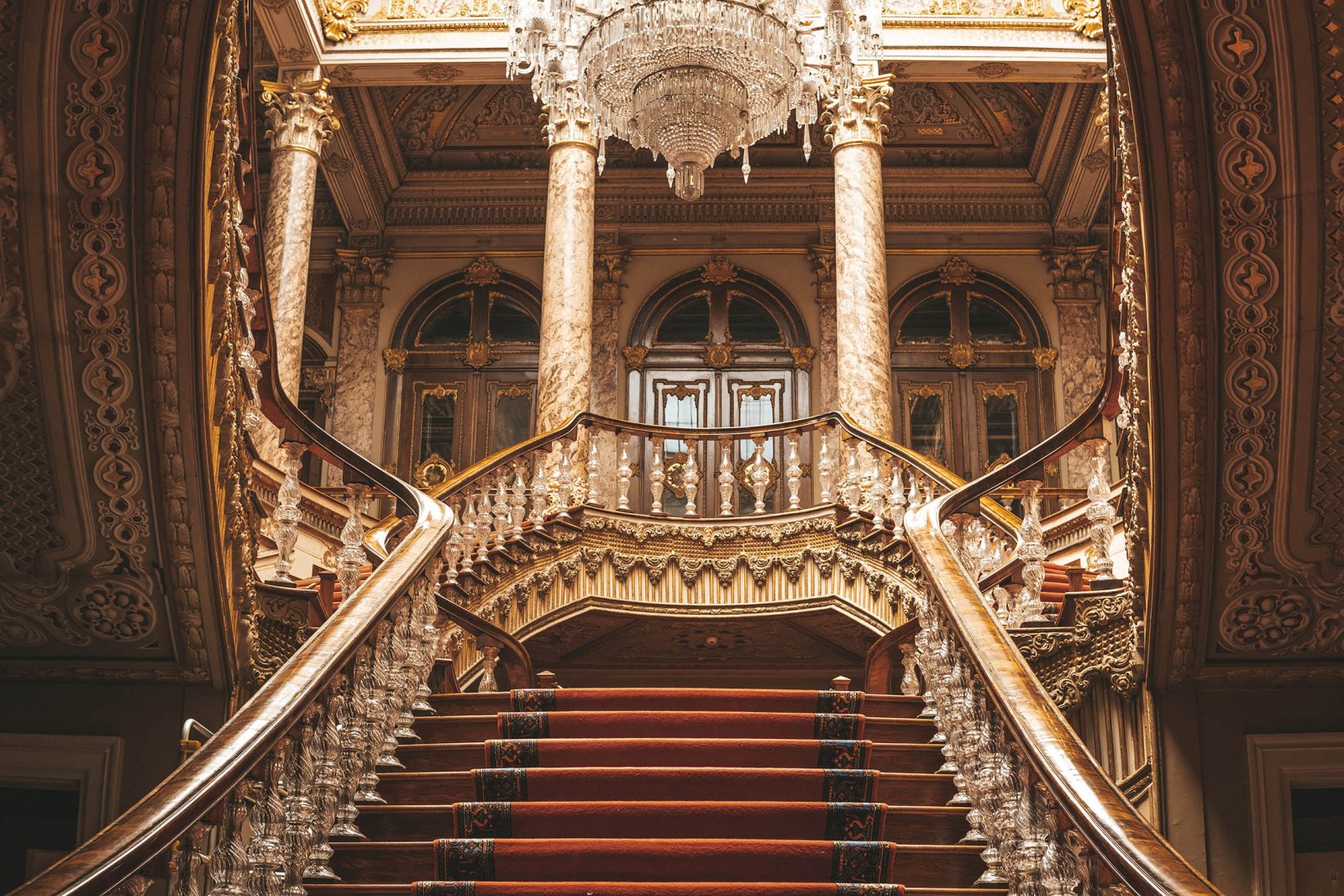
Crystal staircases in Selamlık
Harem
The tour then proceeds to the Harem, the private quarters of the sultan and his family. Contrary to Orientalist stereotypes that often depict harems as exotic and indulgent spaces, the Harem at Dolmabahçe was a structured and hierarchical residence. It housed the sultan’s mother, wives, and children, as well as their attendants. The decor is slightly more intimate and less flashy than the Selamlık, reflecting the personal lives of its residents. Nonetheless, it remains luxurious, with intricately designed rooms and an ambiance of quiet grandeur. Harem also includes the room in which Mustafa Kemal Atatürk, the founder of the modern Turkish Republic, spent his last days.
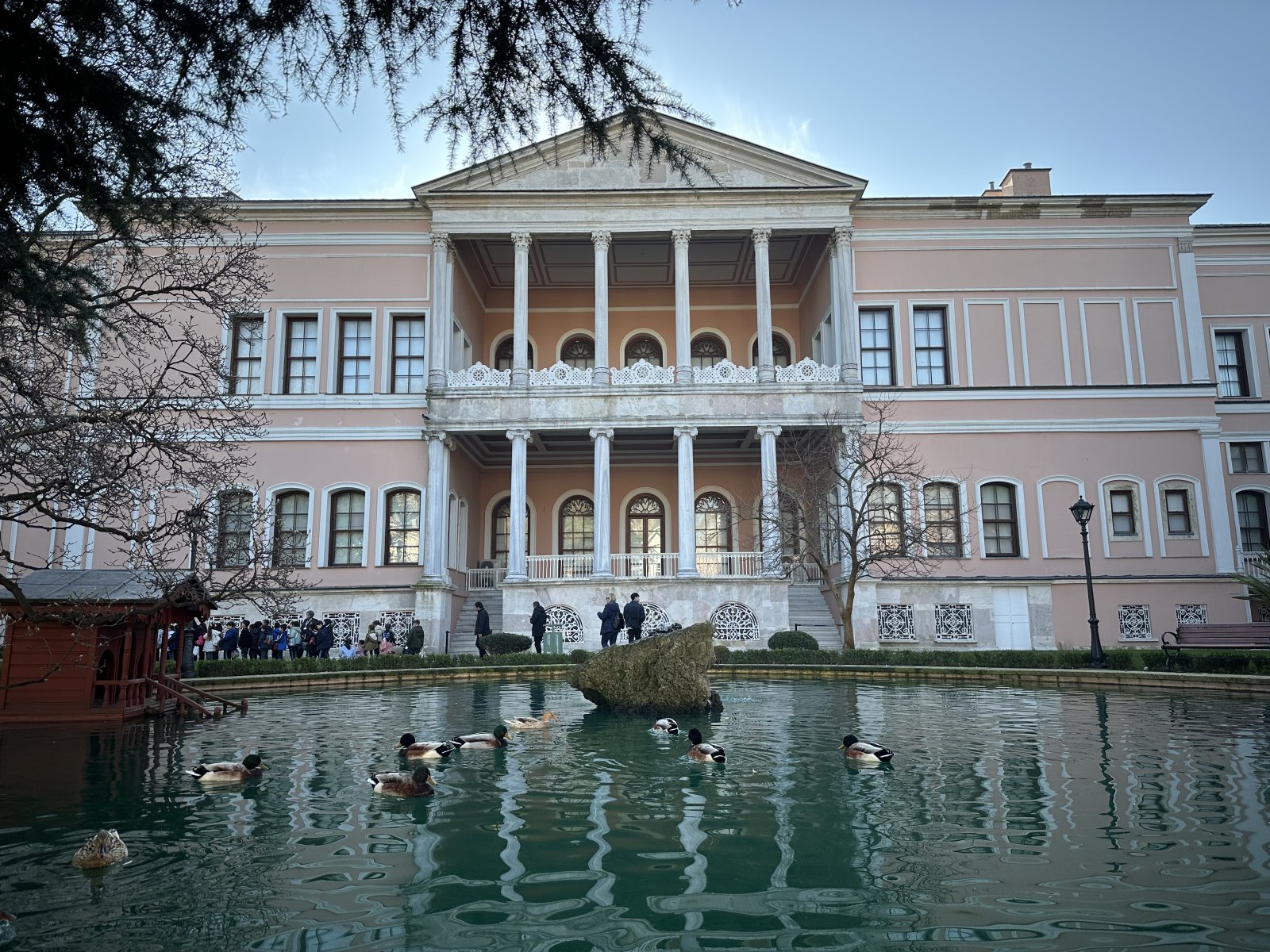
Harem Building from Outside
Painting Museum
The visit concludes at the Painting Museum, home to a remarkable collection of works by both Ottoman and European artists. This section provides insight into the empire’s cultural engagement with the West and its appreciation of art during the 19th century. The collection is especially special for the paintings of the Russian painter Ivan Aivazovsky, whose works were admired by many Ottoman sultans in the 19th century. His paintings portray Istanbul from many different vantage points and show the beauty of the city.
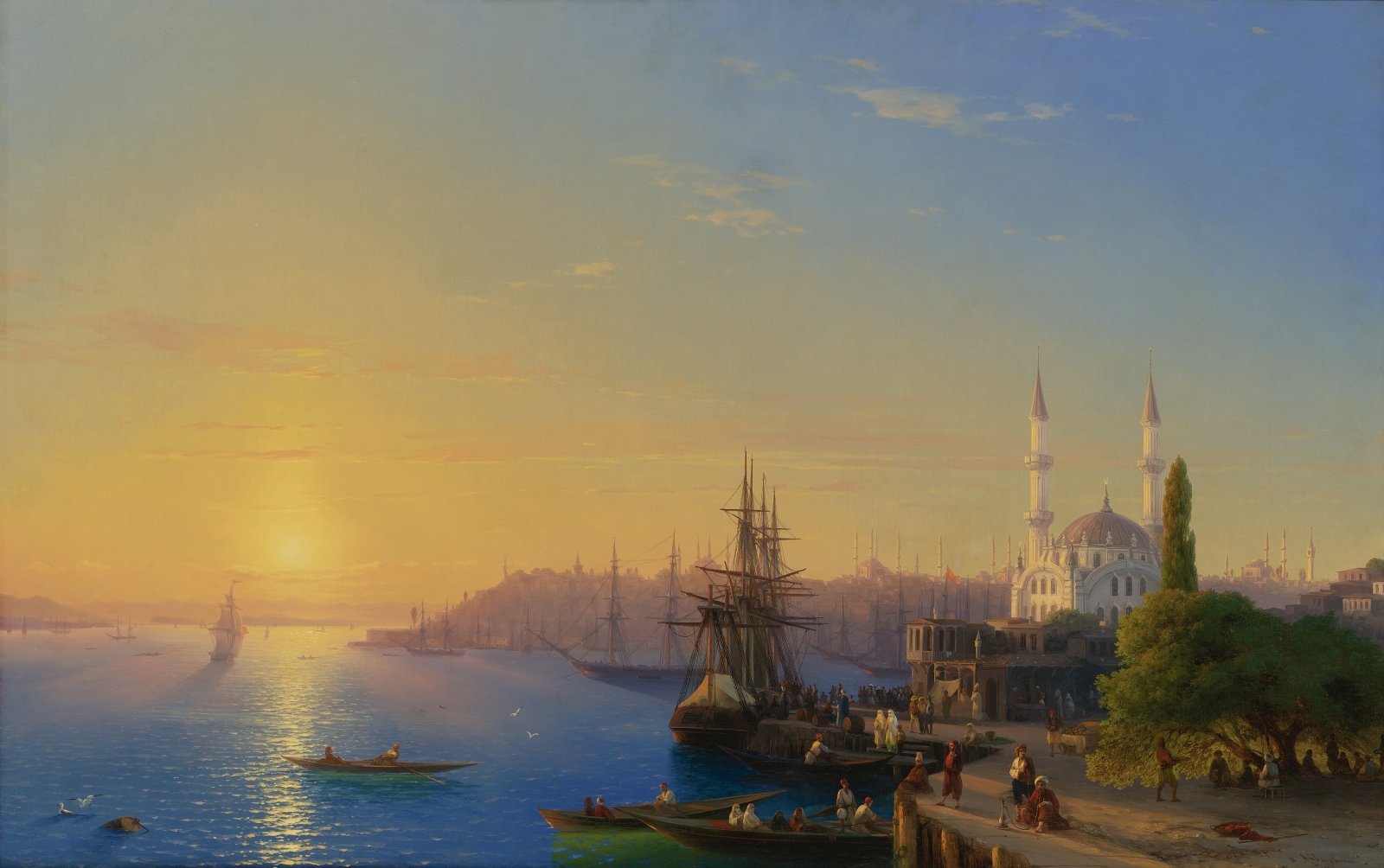
View of Constantinople, with the Nusretiye Mosque (1856), Ivan Aivazovsky
Lunch and the Bosphorus Cruise
After touring Dolmabahçe Palace, take a break to enjoy lunch at one of the nearby restaurants offering stunning views of the Bosphorus. From fresh seafood to traditional Turkish dishes, the area boasts a variety of culinary delights to suit every taste. You may choose a restaurant in the new modern port/mall called Galataport or go to the other exit of the palace and choose a more local restaurant in Beşiktaş. A great variety of options awaits you on the both sides! It’s also possible to eat & drink in one of the cafes that are located in the place.
Once you’ve recharged, it’s time for the Bosphorus Cruise. Departing from nearby docks, the cruise takes you on a scenic journey along the strait that divides Europe and Asia. You’ll pass iconic landmarks such as the Maiden’s Tower, Çırağan Palace, Rumeli Fortress, and the Bosphorus Bridge. If you choose a sunset cruise, you’ll see breathtaking views as the city’s skyline looks amazing during the golden hours.
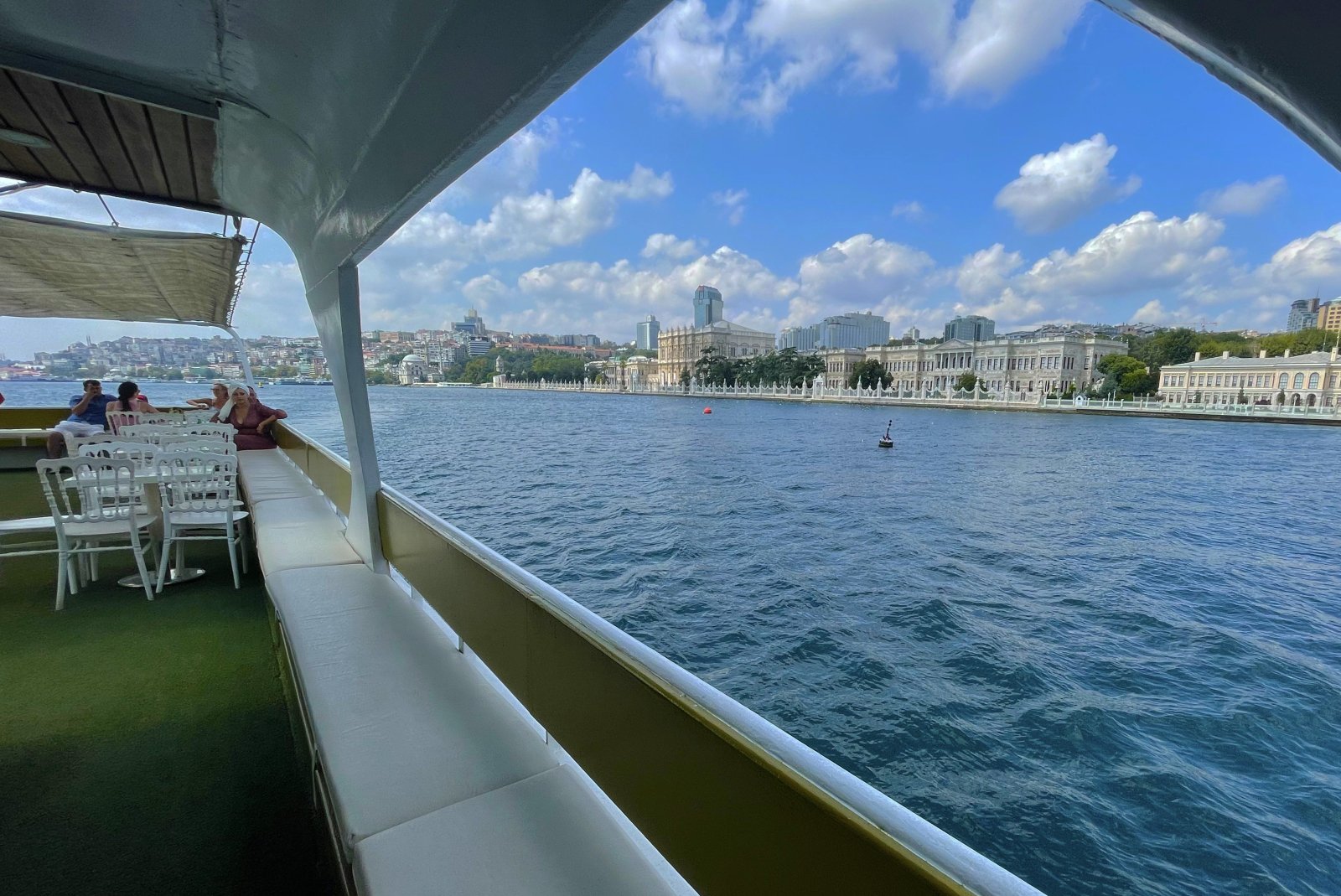
Dolmabahce Palace seen from the Bosphorus Cruise Tour
Practical Tips
- Timing: Arrive early at Dolmabahçe Palace to avoid crowds. Allocate at least two to three hours for the tour.
- Tickets: Purchase a combined ticket for the palace and the Painting Museum to save time.
- Cruise Options: Choose between short cruises or longer, more comprehensive tours depending on your schedule.
- What to Wear: Comfortable footwear is essential, as there is a fair amount of walking involved. Also note that the Bosphorus cruise tour might be a bit windy, so make sure that you bring your jacket with you!
- Photo: Taking photos and filming are not permitted in the interiors of the palace, however you can take photos and videos from the outside.
Dolmabahçe Palace and the Bosphorus Cruise offer a perfect mix of history, culture, and natural beauty, making them an unforgettable experience for anyone visiting Istanbul.